

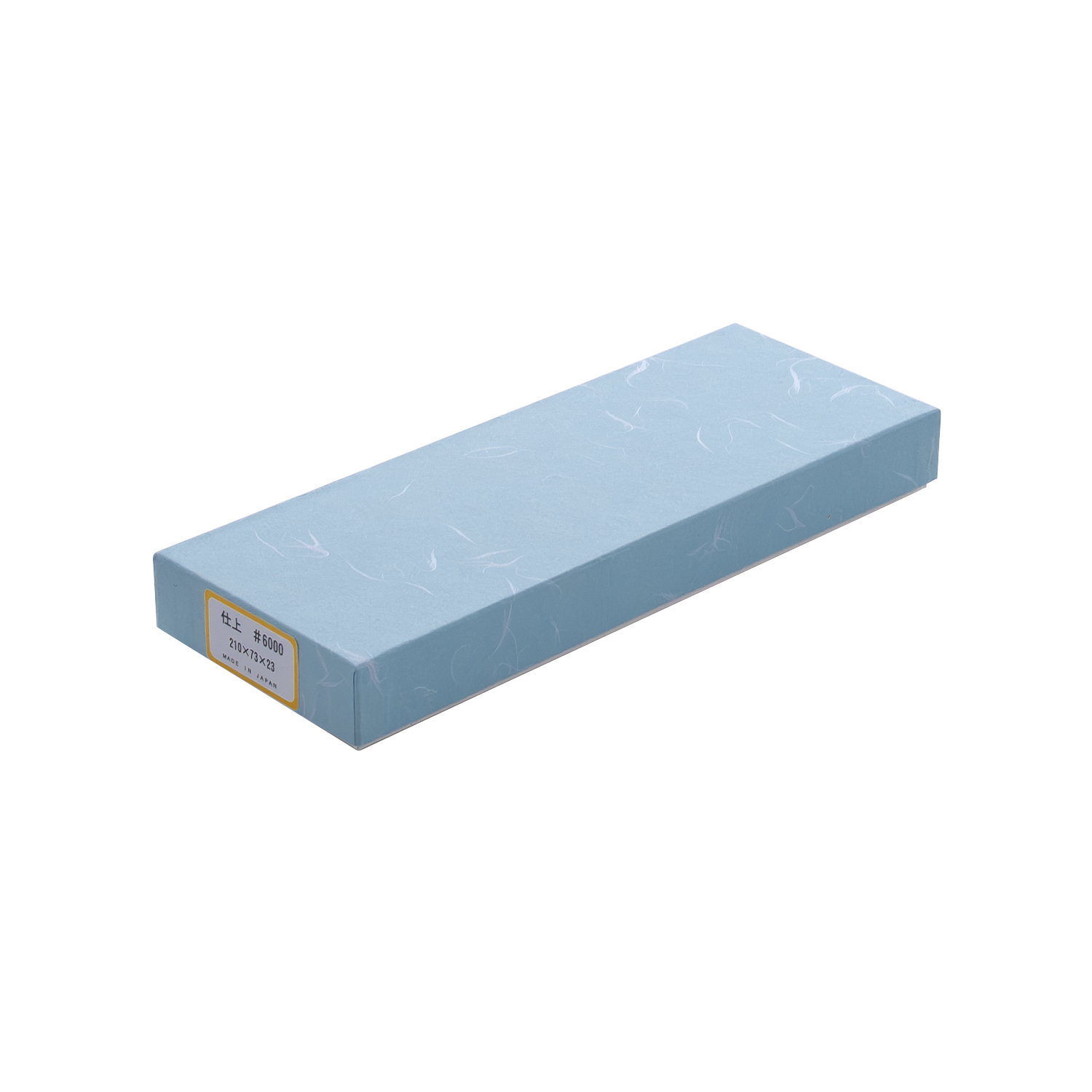
PIERRE ARASHIYAMA #6000
Overview
Smooth like a natural whetstone
Originally a grindstone for carpenter's knives. It has become a standard grit in finishing whetstones, with a finish that makes the steel shine and the base metal cloudy.
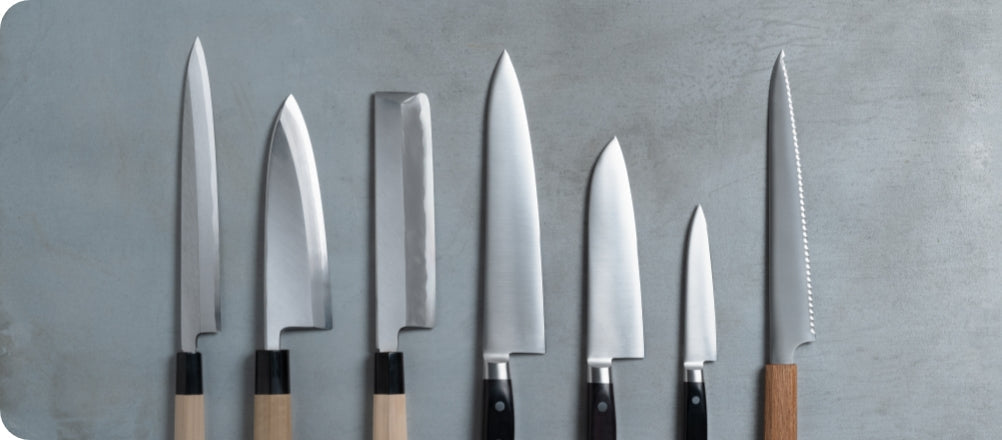
This is a slightly harder whetstone, suitable for Japanese knives and carpenter's knives.
Also, this stone has the smoothness of a natural whetstone due to the addition of natural abrasive powder.
The Role of Finishing Stones
Finishing whetstone is used to sharpen the sharpness or to make the edge of the blade shiny.
In the case of stainless steel knives, the sharpness can be restored by using the medium grit alone, but the sharpness tends to last longer when the finishing grit is used.
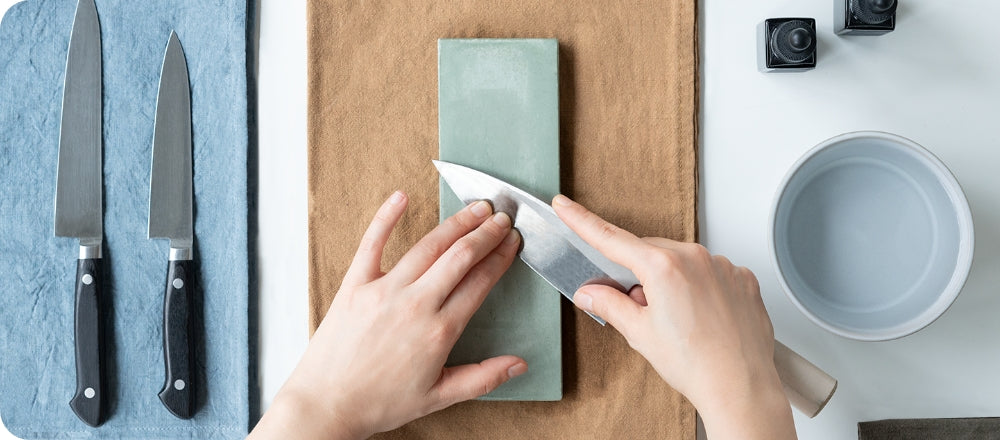
A Delightful Sharpening Experience: Knife Sharpening Using Whetstone and TOKA
Details
Specifications
- Size
- 21cm x 7.3cm x 2.3cm
- Weight
- 745g
*Weights may vary slightly due to individual differences. - Grid
- #6000(Finishing)
- Origin
- Japan
Precaution
-
Do not leave the grinding wheel in water for long periods of time
-
Do not use hot water, detergents, etc.
-
Do not leave outdoors, in direct sunlight, or in freezing conditions
-
Grinding stones are fragile items. Do not drop or hit them.
-
After use, dry in a well-ventilated place before storing.
-
Uneven mixing or bias of additives in the process of mixing binders and abrasives, the raw materials of grinding wheels, may cause discoloration (uneven color) in some parts.
Download
How to Use Grinding Wheels
- Before starting to sharpen, always soak the whetstone thoroughly in water. Once bubbles stop forming, remove it from the water.
NOTE:
- When left soaked in water, the whetstone may become loose and dissolve. Soak it just before sharpening.
- For natural stones, which do not absorb much water, do not soak in water.
- The soaking time may vary depending on the product. - When placing a whetstone without a base, place it on a wet towel to prevent slipping.
- During sharpening, do not wash away the sharpening residue; instead, sprinkle a small amount of water to keep the whetstone surface wet.
- After sharpening, rinse the whetstone thoroughly to remove sharpening residue.
How to Maintain Whetstones (Surface Correction)
- Every whetstone wears down with use, particularly becoming concave and deformed from the center.
- If used as is, uneven wear may occur, affecting the sharpening process. Therefore, it is important to keep the whetstone flat and free from irregularities at all times.
- After sharpening 1 to 2 knives, use a truing stone or a concrete block to level the surface horizontally.
FOIRE AUX QUESTIONS
Oui, vous pouvez les commander. Veuillez nous contacter en utilisant le formulaire de contact.
Pour l'instant, nous n'offrons pas ce service en France car nous n'avons personne pour le faire dans la boutique parisienne. Notre collègue de la boutique de Tokyo vient parfois en France et est en mesure de faire des gravures, cependant nous n'avons pas les dates précises de ses venues. Si vous tenez absolument à faire graver votre couteau, nous pouvons vous aider à passer votre commande au Japon. Dans ce cas, veuillez nous donc contacter via le formulaire de contact avant d'acheter votre couteau.
Dans ce cas, nous pouvons émettre un devis. Merci de nous contacter en utilisant le formulaire de contact. Nous vous remercions également de bien vouloir nous indiquer dans votre demande la date et l'adresse de livraison souhaitées.
CATEGORIE
Autres produits
BOUTIQUE EN LIGNE
Ustensiles de cuisine
TYPES


UTILISATIONS


